FIBA regulation court dimensions.

Exalt SportsBasketball Court
Basketball Court
built to perform.
Basketball courts engineered for consistent response, grip and daily play.
Built for your site
The right bounce begins below the floor.
Our team assesses site conditions, use patterns and delivery requirements before specifying the right system for your project.
Discuss your projectReference guide
Basketball court dimensions,
made clear.
A regulation basketball court is 28 × 15 m. The playing area needs room beyond the lines too — the base, run-off and equipment layout should be resolved as one system.
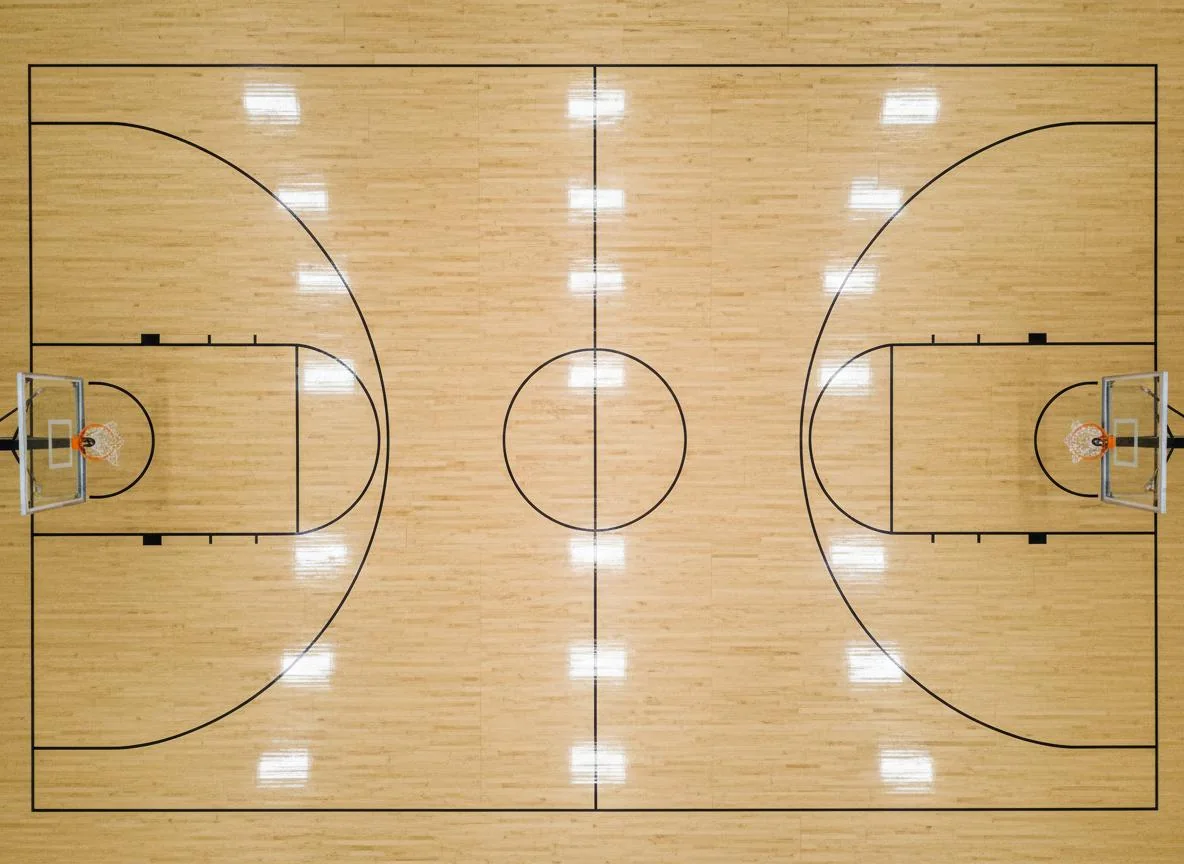
Court with a 2 m clear boundary around the playing lines.
A key reference marking within the court layout.
Always confirm the final layout against the applicable rules, use case and site conditions. FIBA Venue Guide ↗
What we deliver
Designed around the sport.
Every detail is planned for reliable performance, safety and long-term use.
Site assessment
Access, drainage, dimensions and usage reviewed before design.
Technical specification
The right base, surface and accessories for your project.
Turnkey delivery
One team coordinating civil works through final handover.
Basketball Court FAQs
Answers before
you build.
What should be considered before building a basketball court?
Available site dimensions, ground conditions, access, drainage, usage intensity, lighting and the intended level of play all guide the right solution.
Can Exalt work on an existing Basketball Court site?
Yes. We assess the existing base, drainage, access and surrounding infrastructure before recommending whether to upgrade, resurface or build a new system.
How long does a Basketball Court project take?
Programme length depends on site conditions, weather, civil works and the final specification. A site assessment enables a realistic delivery plan.
What affects the cost of a Basketball Court project?
The main drivers are the site, base and drainage requirements, surface specification, lighting, fencing, equipment and access constraints.
How is a Basketball Court facility maintained?
Maintenance depends on the selected system and usage level. It can include cleaning, routine inspections, surface care and checks of drainage, lighting and equipment.
Start with a site assessment
Let us plan your Basketball Court project.
Share your location, site and target timeline. We will come back with a useful next step within 24 hours.
Chat on WhatsApp